Rolling Forward Together
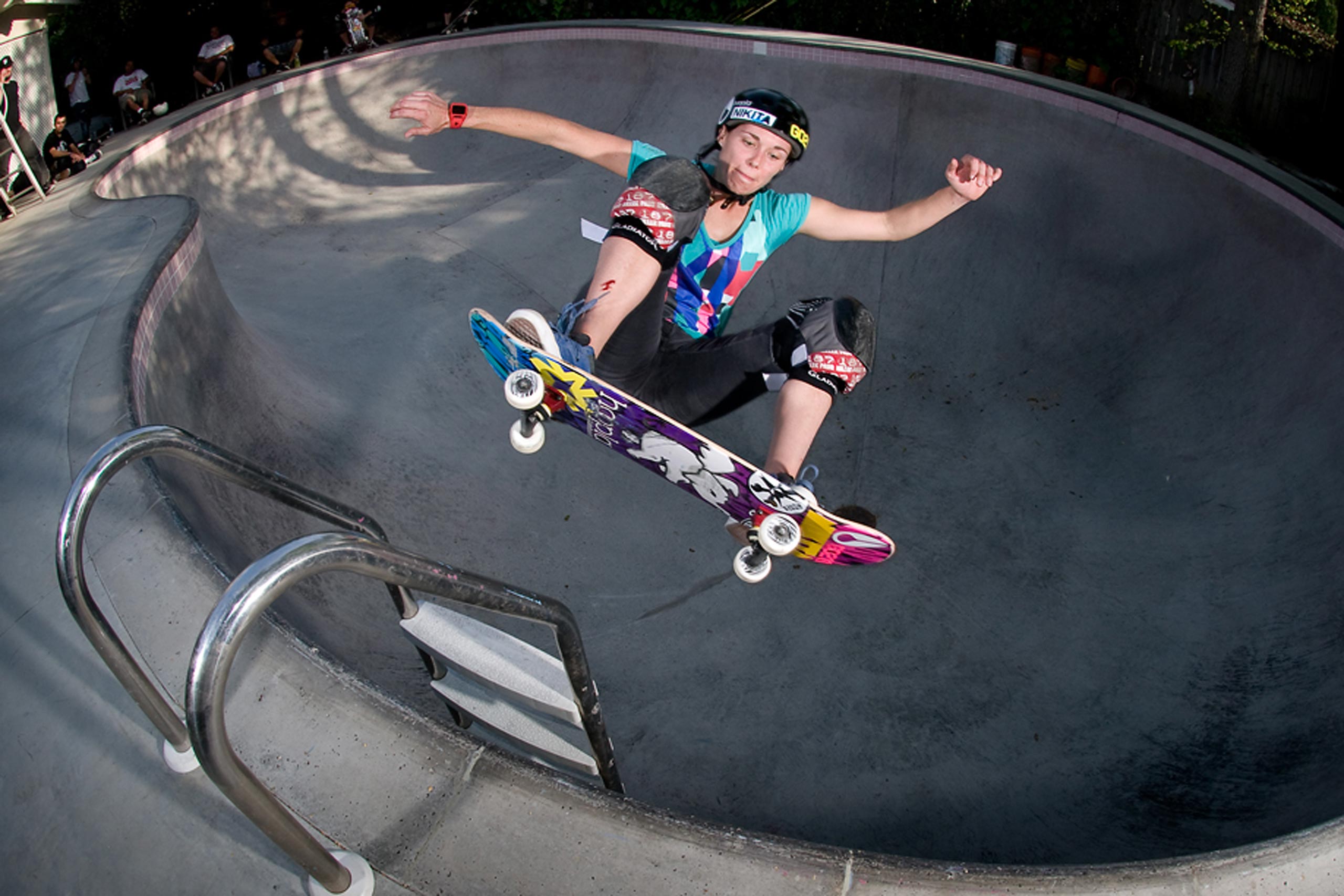
The progress of women in skateboarding is measured not just by podium wins, magazine covers, and big brand sponsorship deals. It also comes from pushing open the doors in boardrooms and skate shops, and through visual documentation and events.
This article shares the insights of five emerging game-changers and established women leaders who have advanced women’s status and opportunities across these fields in skateboarding, including Brazilian skateboarder and founder of Into The Mirror Magazine, Pipa Souza; five times X Games medalist and skateboarding pioneer, Mimi Knoop; Diné Navajo skateboarder, Cecely Todacheenie; skate photographer, Norma Ibarra; and Yeah Girl founder and filmmaker, Sarah Huston.
Who has inspired you in skateboarding?
Cecely: Since I lived on the reservation, I didn’t really have the Internet. The first female skateboarder I heard of was Elissa Steamer when my cousin told me how good she was. So then I went to the local library and checked out one of the Thrasher magazines and used their computer to see who she was.
Mimi: Cara-Beth Burnside is the person who probably helped me the most. I wish the younger generation knew more about her, because skateboarding would not be where it is right now without her. All the things she did to champion it. Her level of skateboarding was so high for so long compared to other women. It further legitimized us.
Sarah: All the photographers in the first Yeah Girl photo show were a big inspiration for me. Realizing there were so many women and non-binary skate photographers out there making incredible work was really exciting and it’s because of them that Yeah Girl became a thing.
Pipa: Lisa Whitaker. She’s the first one that I think about. And Alex White, she’s always up to help me, and has given me a lot of tips… And Liza Araujo from Check It Out Sk84Girls Mag, because of her I’m doing a magazine here in Brazil now called Into the Mirror.
Norma: I was really inspired by Michelle Pazel at Antisocial Skate Shop. She’s not only a shop owner; she’s a community builder.

What would you like people to know more about?
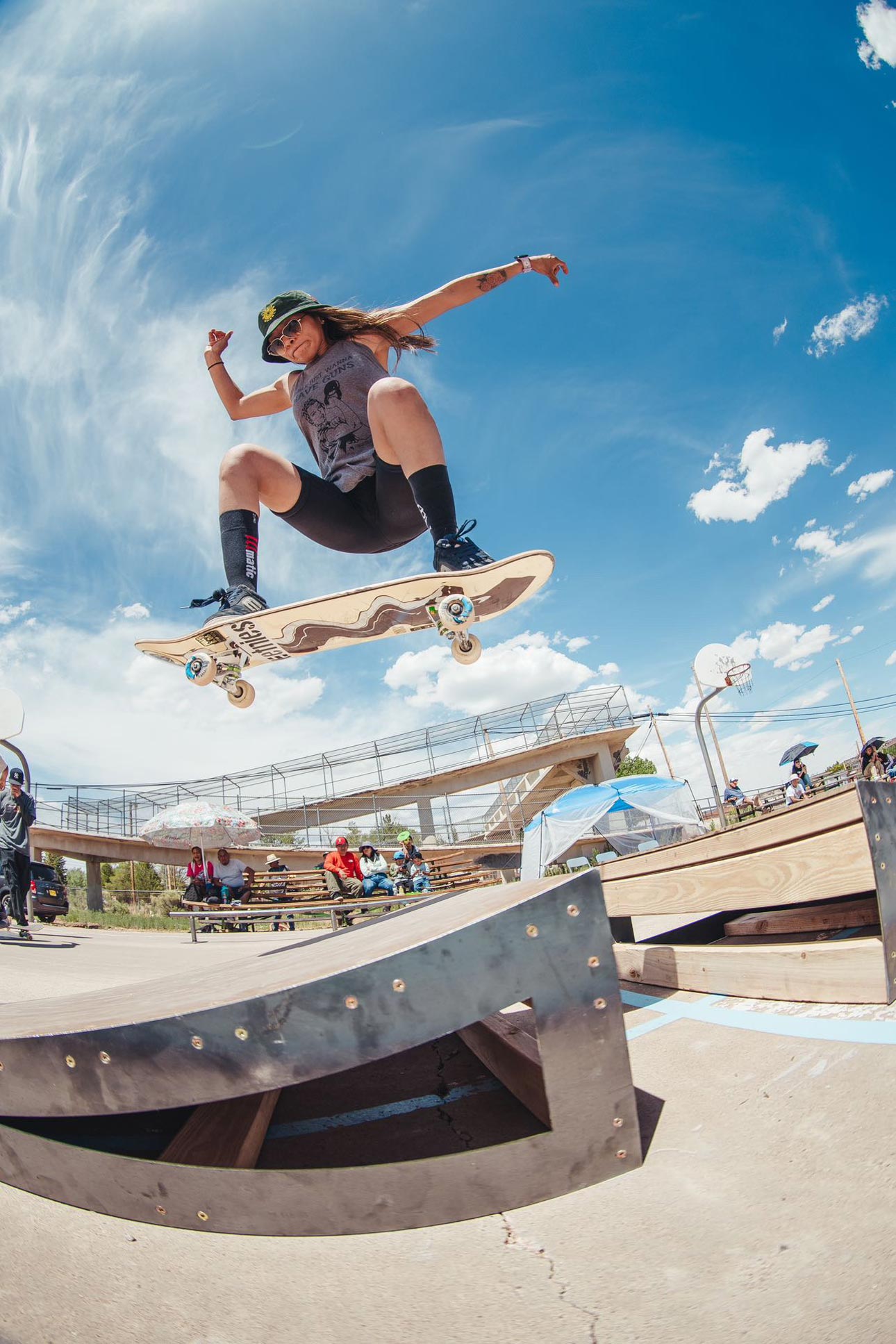
Cecely: I want more girls from my area and other reservations to get noticed in skateboarding. Whether it’s filming a video part or being the person behind the lens, or doing events. We can show each other that other reservations and other Indigenous skateboarders are out there and be recognized as being a part of skateboarding. Also, as a shop owner, it would be good to have more women recognized in the industry. For their hard work as business owners, pro skateboarders,photographers and videographers. I think more females all round should be recognized.
Pipa: I really want to see more girls doing videos, media and magazines. Especially Black girls too. I know that it’s hard for every woman, but for the Black girls it’s even harder. So that’s my desire — to see more girls, and Black girls, doing their thing. When people see us doing our jobs and creating things, I think they don’t realize how much in love with skateboarding we are and we’re not usually compensated or paid enough. But I’ll keep doing it because it’s how I feel, that I was born to do this. You know, that’s my mission.
Mimi: A lot of people know about the prize for equality with X Games. I think one of the things I haven’t talked about as much, or that just hasn’t been out there, is that from 2009 to maybe 2012, we fought really hard to get Park included at X Games as a discipline for women. We need to see women in all sorts of leadership and decision-making roles. There’s a lot that goes into that behind the scenes that no one’s aware of. Even now, a lot of times, especially with brands with women’s names, it’s because there’s a woman working at that company making that happen.
Norma: I definitely want to see more women and non-binary folks behind the lens, and for all of us to have more opportunities instead of just kind of being like a checkbox. I would like to see more women photographing, making videos, and writing or in editorial roles, and more inclusivity when it comes to who is telling the stories of our communities. And I think we don’t talk enough about the struggles. If we speak up, we get punished, right? I like to celebrate the accomplishments, and I like to show what we’re doing, the beautiful things, the beautiful community that we’re part of. But I think there’s also a need to speak more about the struggles.
What opportunities still need to be paved and what’s on your wishlist?
Mimi: I think it’s really about action, and we all live it, right? I think it’s about the men in the industry as well. People on the top of the food chain making good decisions and taking action around this. When we started Hoopla Skateboards, George Powell stepped up and said, “Hey, I will fund this whole thing. Like, you girls go and build it. I’ll make it happen”. That was a really good example of that from my own experience.
Ceceley: It’s pretty amazing to see the balance starting to slowly happen, and people getting supported all around. And definitely got to give Jim Thiebauld a shout out from DLX for also helping us out here on the Navajo Nation and other reservations. My wish list for women in skateboarding is just to always have the passion and to always be brave, whether in the industry or just skating. And to just skateboard for yourself.
Pipa: I really want people to really know why they are skating. Keep it fun in the community. Because if we lose our main reason we are doing it, I think that the passion for skateboarding will be forgotten, and people will be skating for another reason. That’s what will keep skateboarding cool. We also need to be supporting the community, the people that are struggling doing projects on the street.
Norma: We all have to come together, and listen to each other, especially those who have often been not listened to and overlooked. We also need to talk about how white feminists can better listen to women of color, trans people and queer communities as well, because often that gets forgotten too.
Sarah: I want to see more women in creative roles in skateboarding, so that we have more influence on how we’re represented, rather than our stories being told from somebody else’s perspective. When we’re in these positions of power, we’re not just accepting opportunities; we’re creating them for ourselves and for others.
What advice would you give to your younger self?
Norma: What I will tell my young self is don’t let your demons take over. I call them the demons because you know sometimes you’re in your head. Fight your demons and go for it, and don’t wait for validation. Trust your instinct. I think we don’t often talk about how our intuition is usually right. Also, try not to compare yourself and try also to remember that what makes you different is your strength. Embrace being yourself, there’s only one you.
Mimi: When I was in my 20s, competing in skateboarding, and there wasn’t a lot of money in it for women at the time, my parents were very supportive, but I think I had other extended family that was like, “What are you doing? Like, how are you going to support yourself?” And that really got in my head at the time because it just didn’t exist. There was no way to do that. But now, being older, looking back, I think I would tell myself, what’s more rare is having a strong passion for something, because not everyone has that. I think that’s the whole point, to really just live your life as passionately and as fully as you can. And skateboarding has given me that. I’ve been lucky to also create jobs out of it over the years.
Cecely: When I started skateboarding, I didn’t know anything about the industry, being sponsored or pro skateboarders. I just picked up skateboarding to get away from the negativity going on on the reservation. When I picked up a skateboard, all of that kind of went away. That’s when my real passion and creativity started coming out, and my focus. That definitely helped me as a teenager. Once I learned a trick, I just kept doing it over and over. So I would tell myself to just keep going, and everything will be okay as long as you’re following your heart and your passion, doing everything 100%.
Sarah: I’d tell myself to not be afraid to take up space and to always “have the audacity”. That’s a phrase I like to tell myself when I’m feeling unsure about putting myself and my work out there. You can be humble and respectful, and still have the audacity. Ask for what you deserve and what you need, speak up, go after what you want and chase those dreams.
Pipa: My advice to me is keep dreaming, keep doing it. When we have some desire in ourselves, it’s important to pursue it. I cannot imagine myself doing anything else. I had the dream about skateboarding, like to work with skateboarding, being a professional skater, and I’m living it. In a different way than I originally thought but it worked. So if I could say something to myself back in the day, it’s keep doing it because you’re gonna achieve your dream.
This article draws on a full length International Women’s Day panel, co-hosted by Respect is Rad and the SSHRED network, co-chaired by Dr Indigo Willing and Ceceley Todacheenie and co-convened with Dr Benjamin Duester. Part of Knoop’s interview is also included in ‘Breaking the Grip Tape Ceiling’ in Dolores Issue 16, 2026.
Article: Dr Indigo Willing and Cecely Todacheenie
2026 marks ten years of Yeah Girl and we're marking the occasion with the premiere of a new documentary and…

Pushing Boarders is the world’s only skateboarding conference, connecting a wide range of socially progressive groups and individuals, from emerging…

Over the past two years, Mariah Davenport has been conducting an in-depth analysis of the results from their 2021 Skateboarder…